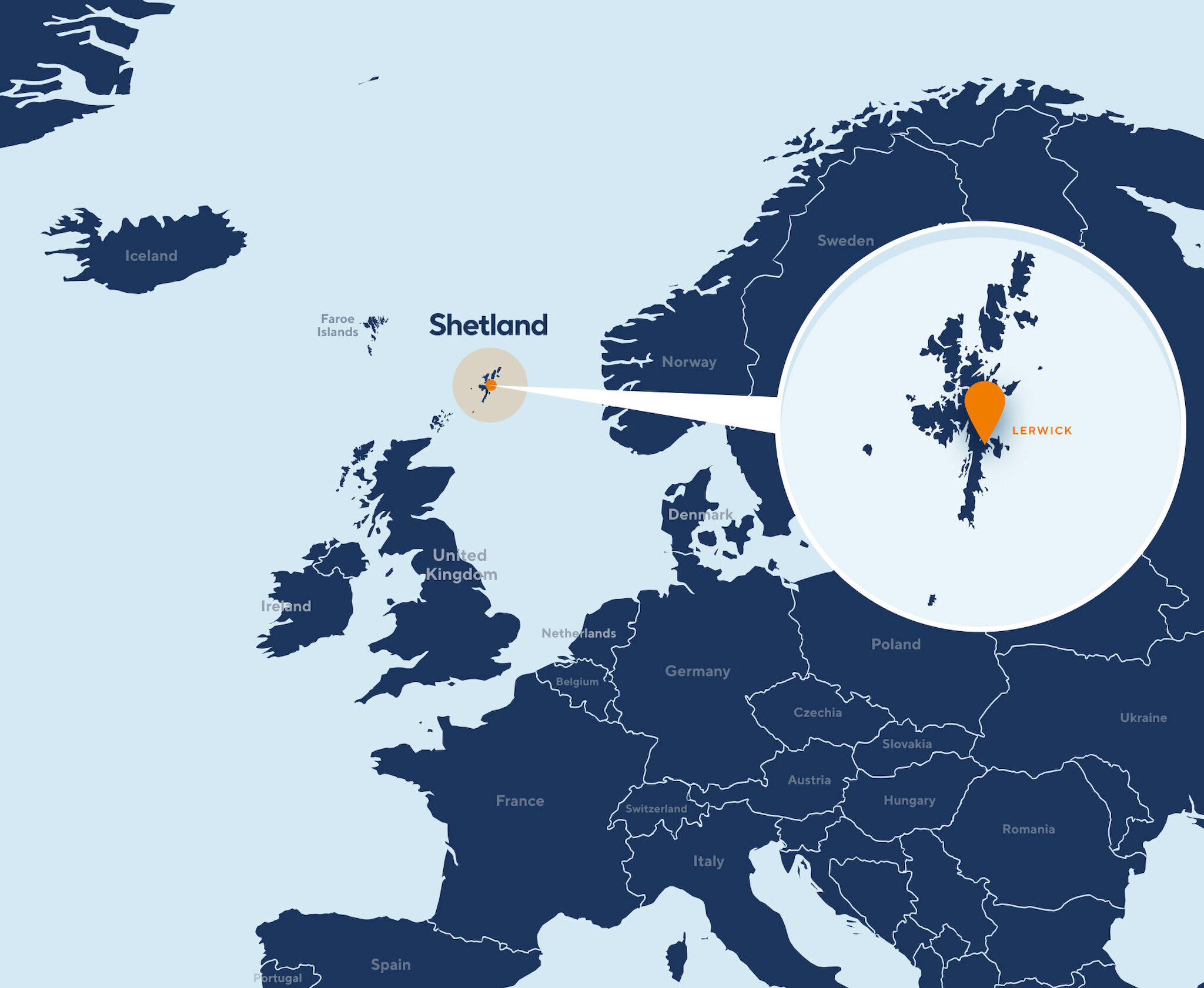
Sixty degrees north. Closer to Bergen than Edinburgh. Never more than three miles from the sea. An archipelago of around 100 islands, a population of 23,000, and more going on than most cities twice its size. Welcome to the Islands of Opportunity.

Further north than you think. Closer than you'd expect.

Shetland sits at 60° north, in the middle of the North Sea where it meets the Atlantic, closer to Bergen than to Edinburgh, and on the same latitude as parts of Alaska. But don't let the map fool you. The Gulf Stream keeps the climate mild, regular flights connect the islands to Aberdeen, Edinburgh and Glasgow in little over an hour, and the overnight ferry from Aberdeen is a journey worth making in its own right.

Shetland is made up of around 100 islands, 16 of them inhabited, with a total population of just over 23,000. The largest island is simply known as the Mainland. To the north lie Yell, Fetlar and Unst — Britain's northernmost island, home to around 640 people and a commercial spaceport. To the south, almost halfway to Orkney, is Fair Isle. You are never more than three miles from the sea.
Ancient and utterly modern

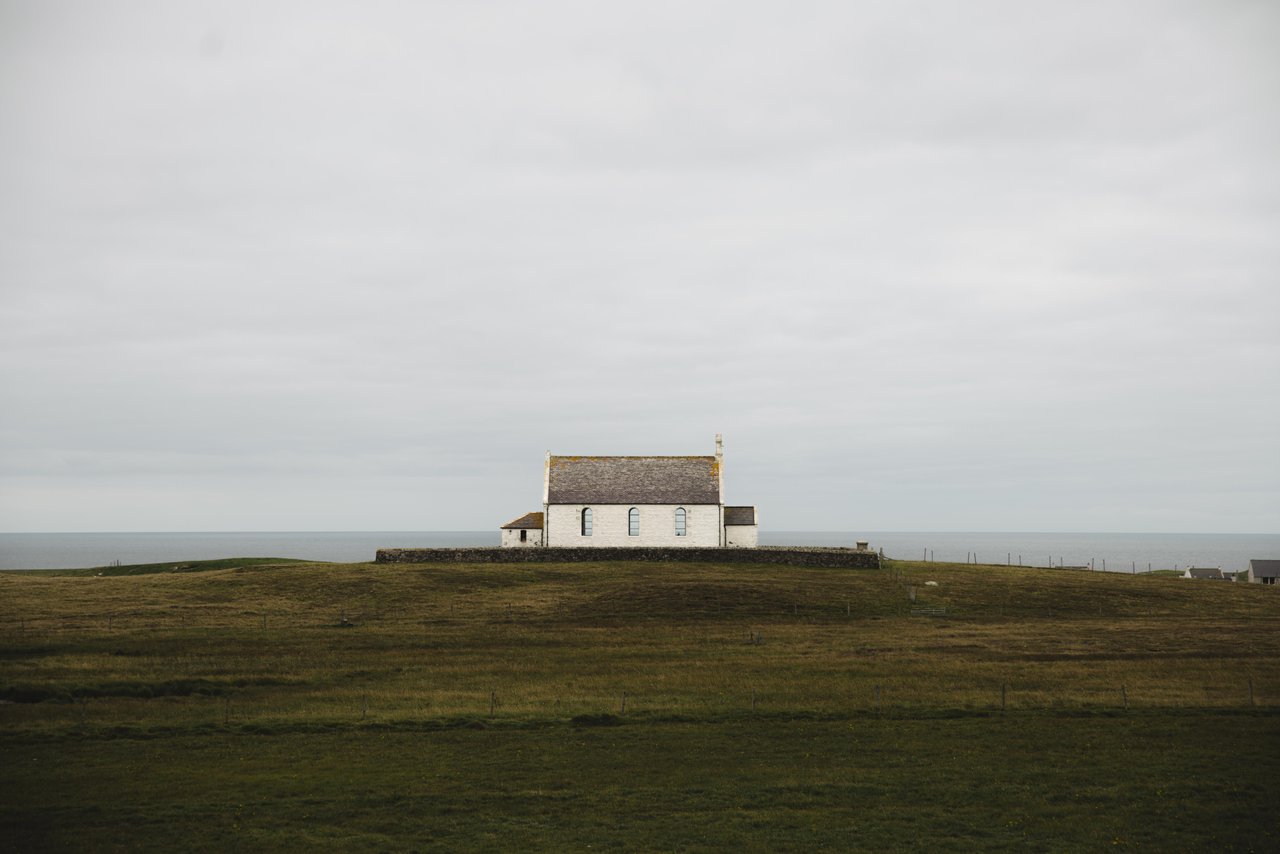
Shetland's landscape was shaped over three billion years — plunging sea cliffs, volcanic headlands, long sandy bays, and glacial valleys that reveal a different view around every corner. Above it all, enormous skies. And in those skies, on the water, and along the shore: some of the most remarkable wildlife in Europe.

Orcas follow the seal pups. Otters thread between ferry terminals. Puffins nest at Sumburgh Head while gannets wheel off Noss. Shetland ponies roam the hills as they have for 4,000 years.

Below the surface, the economy is anything but remote. More fish is landed here than in England, Wales and Northern Ireland combined. The world's first tidal energy array powers homes from Bluemull Sound. The Viking Energy wind farm is one of the largest onshore in the UK. And from Unst — once the edge of the known world — Shetland is preparing to launch satellites into orbit.

Getting to Shetland is easier than most people assume

Loganair flies from Aberdeen (just over an hour), Edinburgh and Glasgow (around 80 minutes), with direct views of Sumburgh Head on approach. There are also flights from Bergen, Norway and Heathrow, London in the summer months. The NorthLink overnight ferry from Aberdeen takes around 12 and a half hours; comfortable cabins, good food, and a genuine sense of arrival. Full travel information →

Whether you’re looking to visit, live, work, study or invest, or are just interested in finding out more about Shetland, you’ll find the answers to some basic questions about Shetland below, and will find out much more on the rest of this site.

Enjoy these Islands of Opportunity!

  • What is Shetland?

    Though it's always written as a singular entity, Shetland is an archipelago in the North Sea of around 100 islands, 16 of them inhabited, with a total population of just over 23,000. The largest island is known as the Mainland. To the north lie Yell, Fetlar and Unst — Britain's northernmost island, home to around 640 people and the innovative SaxaVord Spaceport. To the south, almost halfway to Orkney, is Fair Isle, with a population just over 50, while Foula to the west and Out Skerries to the east are even more sparsely populated.

  • Where exactly is Shetland?

    Shetland is in the middle of the North Sea, surrounded by some of the richest fishing grounds in the world, excellent natural energy resources, and close to some of its most productive oil fields. The 60° latitude line cuts through Shetland's South Mainland — putting the islands on the same latitude as parts of Alaska, though the Gulf Stream keeps temperatures mild. Directly to the east lies the Norwegian coast, with Shetland closer to Bergen than Inverness. To find out more, explore the interactive map or discover the geology that shaped the islands on the Geopark Shetland pages.

  • How do I get to Shetland?

    The main ways are by plane or ferry, though you could also arrive on a private yacht or as part of a cruise. Flights are operated by Loganair, taking just over an hour from Aberdeen and around 80 minutes from Edinburgh and Glasgow — with memorable views as the plane descends over Sumburgh Head. The NorthLink overnight ferry from Aberdeen to Lerwick takes around 12 and a half hours, leaving in the evening and arriving early morning. It's a journey worth making in itself, with comfortable cabins, good food, and a genuine sense of arrival. For more, see the flights and ferry pages.

  • How do I get around once I'm here? 

    Shetland is bigger than most people expect. It takes around an hour to drive from Sumburgh at the southern tip to Toft in the north — and from there, timing the ferries right, around two hours to reach Hermaness on Britain's northernmost edge. That end-to-end journey is around 85 miles, with countless detours worth taking, including to the beautiful West Side and the lighthouse at Eshaness. Roads are generally in excellent condition, though many are single-track — on the North Isles, avoiding sheep is often more of a challenge than avoiding other cars. Read more about getting around Shetland.

  • Where can I stay? 

    There are hotels, self-catering options and B&Bs across the islands, as well as camping and caravan sites and böds — the Shetland answer to the bothy, available at low cost and sometimes without electricity. Shetland is also a great place for wild camping, with the chance to wake up completely surrounded by nature. Read more about accommodation in Shetland or find your perfect place to stay.

  • Can I see the Northern Lights in Shetland?

    As the UK's most northerly archipelago, Shetland is the best place in Britain to see the aurora borealis — known locally as the mirrie dancers. The best window is October to March, when nights are longest and skies darkest. It's never guaranteed (clear skies and solar activity need to align), so build your trip around more than just the lights — there's more than enough to fill the days regardless. Northern lights guide →

  • What is the landscape like? 

    If the landscape feels ancient, that's because it is. Some of Shetland's rocks are almost three billion years old, and the islands are recognised as a UNESCO Global Geopark for a geology shaped by continental collisions, volcanic activity and crashing seas. That incredible journey means the landscape is enormously varied — plunging stacks and cliffs, long sandy bays, glacial valleys and heather moorland that changes character as you travel north. You are never more than three miles from the sea.

  • What's the weather actually like?

    Shetland's northern latitude is tempered by the Gulf Stream, which keeps temperatures moderate year-round — rarely above 18°C in summer, rarely below freezing in winter. The weather is changeable, which is part of the character of the place. When it's clear, there are few places like it. One local tip: leave the umbrella at home. The average wind speed is Force 4, which makes them essentially useless. Locals don't use them.

  • What's Shetland's history? 

    More than 5,000 archaeological sites hint at a long and layered history, with evidence of human activity dating back to 4,320 BC. In the ninth century the Vikings arrived, beginning a Norse influence felt to this day — in place names, in dialect, in the fire festivals that light up the winter calendar. Lerwick, for example, takes its name from the Old Norse for 'muddy bay'. Shetland was reclaimed by Scotland in the 15th century, but many Shetlanders still consider themselves Shetlanders first. That distinct identity — outward-looking, independent-minded, deeply rooted — is part of what makes the islands unlike anywhere else in Britain.

  • Is Shetland well connected? 

    Very. Fast broadband, regular flights to three Scottish airports, a daily overnight ferry from Aberdeen, and strong trading links with Norway and beyond. Shetland has been connected to the wider world by sea for centuries — and that instinct for looking outward hasn't changed. Events like the Shetland Folk Festival and Shetland Wool Week draw visitors and performers from across the globe, and the islands are active players in national and international conversations about energy, sustainability and innovation.

  • What is there to do for visitors? 

    The wildlife alone draws people from across the world — from photographing otters and rare red-necked phalaropes to watching orcas from the clifftops, or walking out to the gannet colonies at Noss and Hermaness. There are kayaking trips, boat tours, world-class archaeology, fire festivals, folk music sessions, and some of the best walking in Britain. Shetland also draws a particular kind of enthusiast — birdwatchers, textile lovers, wild swimmers, photographers — especially around events like Shetland Wool Week and the Shetland Folk Festival. But it's equally a place for doing very little, very well.

    Start planning your visit →

  • What do locals get up to? 

    Many people who move to Shetland report their lives becoming busier than before. There are clubs and classes for everything from archery to yoga, golf courses, sports pitches and state-of-the-art leisure centres — especially at Clickimin in Lerwick. The options for outdoor adventure are almost endless: coasteering, kayaking, rock-climbing, racing traditional yoal boats. And there's always something on at Mareel, Shetland's cultural centre. It's easy to get involved. Most people do.

  • What are the big events in the Shetland calendar? 

  • What wildlife can I see in Shetland? 

    Shetland is one of the best places in Europe for wildlife. It has the highest density of otters on the continent, two of the UK's largest gannet colonies, and is a major stopping point for migratory birds — making it a destination of pilgrimage for birdwatchers. Grey and common seals are a constant presence along the shore, and orcas visit regularly, particularly in June and July when the seal pups arrive. Puffins, red-necked phalaropes, humpback whales, Shetland ponies — the list goes on.

    Explore Shetland wildlife →

  • What's the food like? 

    Shetland is about fresh, local produce — from some of the world's finest mussels and exceptional salmon to tender lamb, fresh eggs from roadside honesty boxes, and hand-crafted cheeses. The islands are surrounded by productive fisheries, and aquaculture has grown into a major industry. Local suppliers, fishmongers, bakers and distillers are all working with what's on the doorstep — from Shetland gin and beer to sea salt, marmalade and the famous Shetland Black potato.

    Food and drink →

  • What drives the Shetland economy? 

    Shetland is less reliant on tourism than most Scottish islands. The energy industry has underpinned the economy since the 1970s, and is now transitioning from oil and gas toward renewables — the Viking Energy wind farm is one of the largest onshore in the UK, and Shetland aims to provide 5% of the UK's low-carbon energy by 2050.

    Even so, fishing and aquaculture remain the backbone: more fish is landed in Shetland than in England, Wales and Northern Ireland combined. The islands also have a fast-growing role in the space industry, with the SaxaVord Spaceport on Unst set to become the UK's first commercial rocket launchpad. Employment in Shetland consistently runs around 10% higher than the Scottish average.

    Invest in Shetland →

  • Can I move to Shetland? 

    Yes — and more people do than you might expect. Shetland actively recruits from across the UK, particularly for public sector roles in healthcare, education and social care. Housing is more affordable than most of the UK, schools perform well, communities are close-knit and safe, and the quality of life is genuinely difficult to find elsewhere. Many people who arrive for a job end up staying for the islands.

    Find out about living and working in Shetland →

  • Will I understand what people are saying? 

    Mostly, yes — though you might miss the odd word in a conversation between born-and-bred Shetlanders. The dialect is a unique blend of Lowland Scots and Old Norse, with words that have been in daily use for centuries. A few to get you started: peerie (small), bruck (litter), mirrie dancers (northern lights), simmer dim (the long twilight of a summer evening), tammy norrie (puffin), and draatsi (otter). You'll pick them up quickly.

  • Is it like the Shetland TV series? 

    Yes and no. The moorlands, beaches and dramatic skies are all real, and if you're a fan of the early series, you can walk past Jimmy Perez's house on The Lodberries in Lerwick. But not every scene was filmed here, and the real thing is better. More to the point: there's considerably less crime. Shetland is an exceptionally safe place where communities look out for one another — less a place to hide, more a place to be found.

Get inspired by Shetland

Inspirational blog content from across Shetland, including the latest news, recipes, visitor ideas, local insights and more.

Read our blogs